
Modi holds phone talks with Iran’s President after US attack

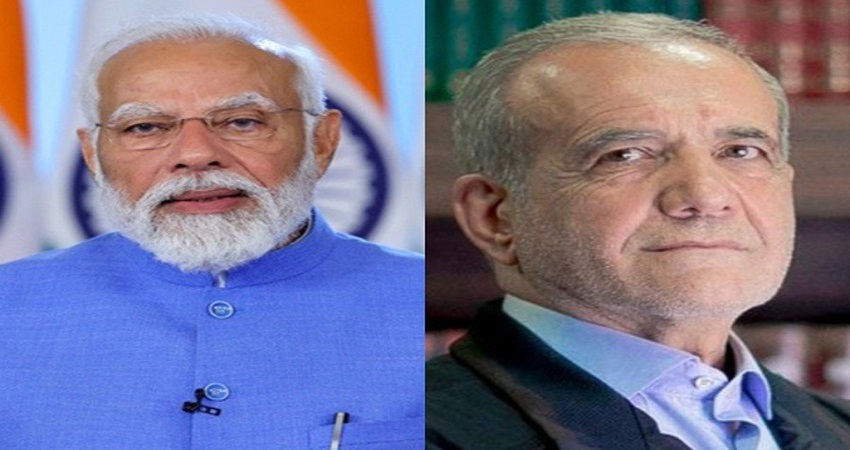
According to Indian media reports citing informed sources, the initiative for the call came from President Pezeshkian following the US attacks on Iran’s Natanz, Isfahan, and Fordow nuclear sites. During the discussion, President Pezeshkian provided a detailed briefing on the unfolding situation and described India as a “close ally and partner” in fostering peace, security, and stability in West Asia.
Prime Minister Modi expressed deep concern over the escalating tensions and urged for immediate de-escalation through dialogue and diplomatic engagement.
This development unfolds amid a broader conflict triggered by the October 2023 attack in Israel, which has disrupted vital shipping lanes in the Red Sea due to ongoing Houthi rebel attacks. The Bab-el-Mandeb Strait, a strategic chokepoint connecting the Red Sea to the Indian Ocean, remains volatile, impacting global trade routes.
India’s trade relations with both Iran and Israel are substantial. In the 2024-25 fiscal year, India exported $1.24 billion worth of goods to Iran and $2.1 billion to Israel, while imports stood at $441.8 million and $1.6 billion, respectively. This underscores India’s nuanced diplomatic approach, maintaining strong bilateral ties with both nations despite regional rivalries.
Analysts warn that any escalation could have far-reaching effects on trade and security across West Asia and beyond, affecting key countries including Iraq, Jordan, Lebanon, Syria, and Yemen.
With 34 percent of India’s exports routed through the Red Sea — a major artery for global shipping — the stakes for regional stability are high. The international community is closely watching India’s diplomatic engagement as it seeks to balance strategic interests and promote peace amid a volatile geopolitical landscape.