
Glorious 7 November: symbol of national dignity and reawakening

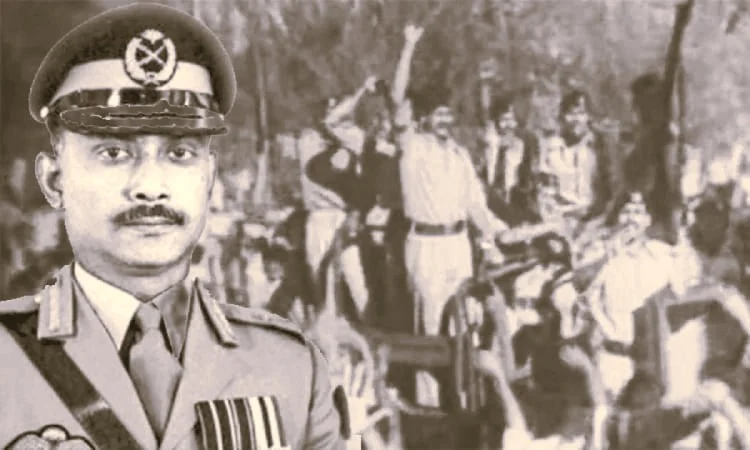
There are certain days in our history that transcend their time and shape the context of an entire era. 7 November is one such day. Against the backdrop of the horrors of 15 August and the political turmoil that followed, this day marked a turning point in the history of Bangladesh. It was not merely a moment of political change; it was a day of restoring national confidence, reorganising the state and mobilising the strength of the people once again.
It demonstrated that, at a critical moment in a nation’s history, when the inherent strength of the people and the discipline of the armed forces come together, a nation can find a new path forward. At the centre of that path emerged Shaheed President Ziaur Rahman, the great proclaimer of independence—a valiant freedom fighter, an organiser and, above all, a visionary statesman whose decisions and actions laid the foundations of our present state structure.
Having come to the forefront of state power through the revolution, Ziaur Rahman did not pursue a politics of vengeance. Instead, standing amid deep divisions, he sowed the seeds of unity. His immediate priorities, given the circumstances of the time, were to stabilise the machinery of the state, reorganise the administrative structure and restore public confidence.
The words of American political scientist Samuel Huntington—‘Order precedes liberty’—were reflected in his philosophy of governance. Zia knew that rule through elections would be meaningful only when the state’s capacity to function had been restored. He established discipline in the armed forces, restored multi-party democracy, sought legitimacy through a referendum and opened up new avenues for political participation. These decisions will remain part of history as evidence of his prudence and vision of the state.
Ziaur Rahman’s vision of the state was profoundly pragmatic. He formulated policies of governance on the basis of reality rather than emotion. He restored the right to multi-party democracy, introduced referendums and direct elections as means of testing public support for leadership, and took national politics beyond elite-centred circles to the doorsteps of ordinary people. His initiatives also paved the way for the emergence of a new generation, new political trends and new leadership. His words continue to resonate: ‘Politics is for the welfare of the people.’
Zia’s role in economic reconstruction was a milestone. He steered a war-ravaged, ration-dependent and state-controlled economy towards self-reliance and production. Post-liberation Bangladesh was an exhausted and battered economy, confined within a state-controlled structure and dependent on food supplies and foreign aid. The country was often described as a land of famine. It was in these circumstances that Zia demonstrated that Bangladesh could stand on its own with dignity; what it needed was proper planning, hard work and wider access to economic opportunities
Through canal excavation and the re-excavation of rivers, Ziaur Rahman sought to retain water during the flood season, enabling farmers to cultivate three crops a year on land that had previously produced only one. High-yielding rice varieties, expanded irrigation, fertiliser and agricultural credit, and improvements to rural communications formed the foundations of his agricultural revolution. Under the strategies pursued during his tenure,
Bangladesh began moving towards greater food self-sufficiency. At the same time, he opened up overseas labour markets, which have since become a major source of foreign exchange for the country. He laid the foundations of today’s remittance-based economic stability.
Ziaur Rahman’s ‘Bangladeshi nationalism’ was not a politics of narrow identity. Rather, it was an inclusive vision of the state that sought to bring together the plains and the hills, Bengalis and ethnic communities, rural and urban populations, and people of different faiths and cultures. He understood that nation-building derives its strength from respecting diversity and from a shared commitment to building the future side by side.
Giving due recognition in the mainstream to the cultural heritage of Muslims, Hindus, Christians, Buddhists and ethnic communities was part of his vision of the state. Embedded in this outlook was the idea of a ‘rainbow state’, in which every citizen’s identity, faith and history would enjoy equal dignity, while national identity would be built on the foundation of a shared consciousness.
Zia’s Bangladeshi nationalism, therefore, was not confined within the boundaries of language or geography. It embodied the values of independence, sovereignty and pluralistic unity, which, according to the author, helped establish the nation’s identity firmly on the international stage.
Alongside governing the country, Zia took Bangladesh’s international diplomacy to new heights. He established the country’s independent identity on the world stage with dignity. He developed balanced relations with the Muslim world, neighbouring countries and global powers. At the heart of his policy was a diplomacy based on dignity, balance and the protection of national interests.
By expanding international labour markets, development cooperation and regional collaboration, he paved the way for Bangladesh to establish itself on the global economic map. His role in the subsequent formation of the South Asian Association for Regional Cooperation (SAARC) was unique.
Ziaur Rahman is often compared with Singapore’s Lee Kuan Yew and Malaysia’s Mahathir Mohamad because he believed in development-oriented pragmatism and remained committed to strict discipline, foresight and institution-building. Like South Korea’s Park Chung-hee, he understood that national progress does not come through slogans alone; it requires rigorous organisation, effective planning and capable leadership.
The political realities of Bangladesh today once again remind us of the spirit of 7 November. Through the July mass uprising, the nation has once again reached the threshold of historic change, seeking democracy, voting rights, the rule of law, freedom of expression and good governance.
The people of Bangladesh expect leadership that seeks to unite rather than divide the nation, and that believes in serving the people rather than displaying power. The strength of the state comes from the consent of its people, while national dignity is safeguarded through political inclusion, freedom and governance based on justice.
The spirit of 7 November symbolises national reawakening, dignity and the empowerment of ordinary people. The history of Ziaur Rahman teaches us that a vision of the state is not merely about governing; it is the demanding responsibility of building the future, the moral courage to make bold decisions and an unwavering faith in the people.
Shaheed Zia demonstrated that the strength of a head of state lies not in personal luxury but in morality, honesty and dedication. There is no record of his accumulating personal wealth; what he left behind was an example of principles, discipline and national dignity.Today, BNP pledges to preserve that legacy: reconstruction, not vengeance; unity, not division; and the restoration of public trust, not the seizure of power. This is why 7 November is not merely a memory of the past; it is an inspiration for the present and a commitment to the future.
7 November has taught us that a nation cannot be held back indefinitely, and no autocratic regime can imprison the aspirations of its people. Bangladesh will rise again through the strength of democracy, the confidence of its people and an unwavering belief in national dignity. In the next election, the people will speak through their voting rights, their dignity and their hopes and aspirations.
That day will mark not merely the victory of a political party, but the victory of democracy, the victory of citizens and the rebirth of the state. The country will stand once again on the foundations of law, rights, development and good governance—as Zia had set it.
The author is a socio-cultural organiser, former Information and Research Secretary of the BNP and former president of the Jatiyatabadi Samajik Sanskritik Sangstha.
(The article was originally written in Benglali and translated into English by Harun Al Nasif, City Editor, BSS.)