
Death toll nears 2,000 as questions mount over Venezuela’s quake response

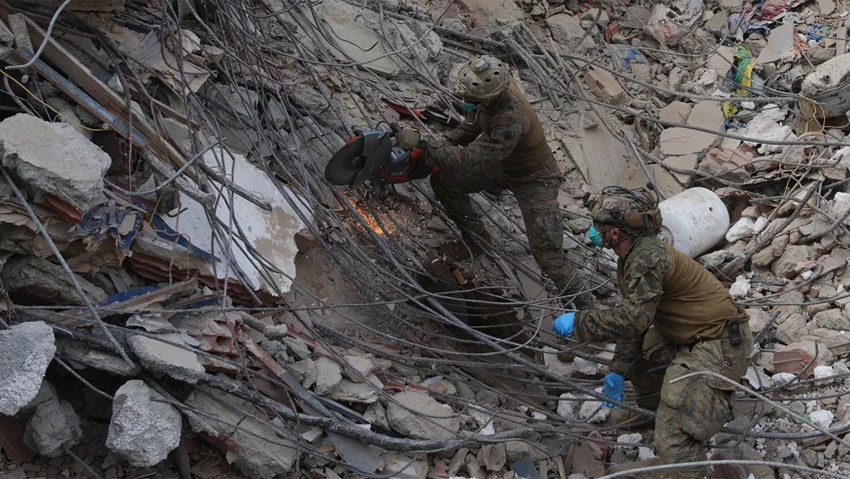
Online desk: Venezuela’s devastating twin earthquakes have killed at least 1,943 people and injured more than 10,500, while thousands remain missing, according to official figures, as survivors increasingly accuse the government of a slow and poorly coordinated rescue effort.
More than a week after the 7.2- and 7.5-magnitude earthquakes struck northern Venezuela on June 24, families continue searching for loved ones trapped beneath collapsed buildings in La Guaira state, Caracas and surrounding areas, with many saying civilian volunteers and foreign rescue teams have carried out much of the search and recovery work, reports AP.
Among them is Angelica Mundrain, who has spent six days waiting outside the ruins of her beachfront apartment building in La Guaira, hoping heavy machinery will arrive to recover the bodies of her son, niece and nephew buried beneath concrete and twisted steel.
“We’ve been abandoned,” Mundrain said, describing what she called a lack of organization, compassion and urgency in the government’s response.
The disaster has exposed significant weaknesses in Venezuela’s emergency response system under acting President Delcy Rodriguez, with residents saying the first 72 hours after the earthquakes were marked by confusion and inadequate coordination.
According to survivors, police and security forces were largely deployed to manage traffic while local residents, often assisted by foreign rescue teams equipped with thermal cameras, sound detection devices and trained search dogs, searched through the rubble. Ambulances reportedly faced long traffic delays, and hospitals struggled with shortages of personnel and medical supplies.
David Smilde, a Venezuela expert at Tulane University, said the government’s response reflects longstanding institutional problems, including the loss of experienced public-sector workers due to low wages and corruption. He said an effective disaster response requires trained personnel, established emergency protocols and clearly defined responsibilities.
Residents also alleged that access to rescue equipment depended in some cases on wealth or political connections. Survivors said specialized machinery, including telescopic cranes, was deployed more quickly to buildings where military officers or politically connected individuals were believed to live, while other sites continued waiting for assistance.
Public frustration has occasionally led to confrontations with equipment operators. At one collapsed public housing complex, residents reportedly blocked an excavator from leaving the site, insisting rescue operations continue.
Rescue crews continued searching for survivors on Tuesday despite diminishing hopes of finding more people alive. Emergency experts say the first 48 to 72 hours after a major earthquake are generally the most critical for saving lives, although survival can be extended if trapped victims have access to food and water.
Electrician Daniel Castillo, who rescued his mother and son from a collapsed public housing building shortly after the earthquakes, said his brother’s body was recovered a day later.
While collecting emergency hygiene supplies from a military distribution point, Castillo criticized the authorities’ response, saying ordinary citizens and foreign rescue workers had shouldered much of the rescue effort while many security personnel remained largely uninvolved.
He contrasted the dust-covered volunteers searching through debris with members of the National Guard whose uniforms, he said, remained spotless throughout the operation.