
BNP won’t ally with Jamaat, NCP still an option: Salahuddin

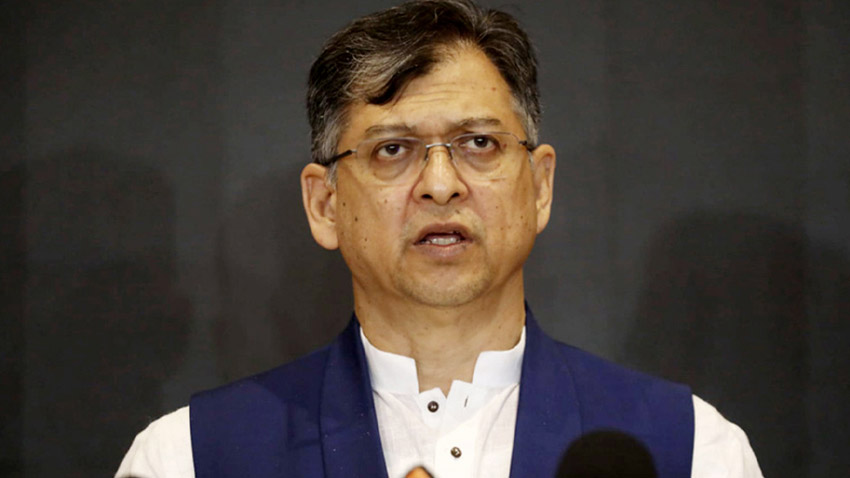
However, he hinted that discussions with the Jatiyo Nagorik Party (NCP) could continue until the election schedule is announced.
In an interview, Salahuddin said that various political parties were raising different demands around the upcoming election as part of their broader strategies. He expressed optimism that the next parliamentary polls would be held under the interim government by mid-February next year.
He also urged the National Consensus Commission to wrap up talks on proposed reforms quickly, warning that unnecessary delays could disrupt the election process.
“I see no possibility of an electoral alliance with Jamaat-e-Islami,” Salahuddin said. “In the past, we formed coalitions with Jamaat for strategic reasons, but this time we do not feel the need.”
He stressed that BNP’s current focus is on forming alliances and a national government with parties that have jointly participated in movements and democratic struggles. “Right now, we are not considering anything beyond that,” he added.
On potential ties with NCP, Salahuddin remarked, “Discussions on political alliances will continue until the election schedule is announced. Time will tell what shape things take.”
He also pointed out that all democratic parties would adopt different strategies before the polls. “We will have to wait to see which strategy BNP ultimately takes and with whom it aligns.”
Salahuddin voiced dissatisfaction with the prolonged discussions within the National Consensus Commission, saying, “I think these talks are dragging on unnecessarily. They should have concluded within a reasonable time.”
He also noted shortcomings in managing the commission meetings, which he believes have slowed the entire process. “Hopefully, these discussions won’t continue for much longer. We need a summary and a decision now.”
Salahuddin stated that the caretaker system had effectively been re-established, pending a Supreme Court review verdict. “We hope the Appellate Division will deliver a positive ruling on the review petition.”
He underscored that the people of Bangladesh want national elections under a neutral caretaker government. “There is still debate about the form of this structure and whether the former Chief Justice should remain Chief Adviser. Alternative ideas are being discussed. If a better option is not agreed upon, the current framework will continue.”
Rejecting proposals to introduce a proportional representation (PR) system for the upcoming elections, Salahuddin argued that Bangladesh lacks the political, social, and electoral culture needed for such a system.
“In PR systems, voters become disconnected from directly elected representatives, feel less motivated to vote, and fragmented parliaments can lead to political instability,” he explained.
He added, “Our voters like to elect familiar, local candidates. Under PR, even if a party gets more votes in an area, someone from another area could end up representing them. This does not reflect the people’s will and undermines democracy.”
Salahuddin further pointed out that countries with effective PR systems also have strong local governments — a condition not present in Bangladesh. “Here, MPs are directly involved in development projects. That’s why PR would not work.”
He warned that under PR, independent candidates would lose opportunities. “Someone might be very popular but without a party, they would have no chance to get elected. That is unjust and undemocratic.”
According to Salahuddin, small parties support PR because it allows them to secure more seats with fewer votes, but this often results in weak coalition governments and undermines strong leadership.
Representing BNP in the National Consensus Commission, he made clear: “BNP will not accept elections under a PR system in any circumstance.”
He concluded, “Different parties are making various demands — some want reforms, some say no elections without justice, others want PR. These statements serve different purposes. But we are confident elections will take place by February next year under the constitution. Everyone has the right to speak, but many of these remarks are politically motivated.”